

Strategic Planning
Two Rivers Public Health Department (TRPHD) uses a collaborative, data-informed strategic planning process to establish organizational priorities, strengthen operational capacity, and ensure that services remain responsive to the needs of the communities it serves. The process incorporates perspectives from the Board of Health, department leadership, and staff, with facilitation and technical assistance provided by the Office of Public Health Practice (OPHP) at the University of Nebraska Medical Center College of Public Health.
Beginning in December 2025, TRPHD undertook a structured planning process designed to assess the department's current environment, identify organizational strengths and challenges, establish strategic priorities, and develop measurable strategies for improvement. The process supports alignment with national public health accreditation standards and connects organizational decision-making with community health needs.
Phase 1: Stakeholder Engagement and Data Collection
TRPHD began by gathering input from members of its Board of Health through an environmental scan survey. Board members were asked to identify significant public health concerns, emerging challenges, and perceptions of the department's organizational capacity.
This information was shared with staff and incorporated into the broader planning process. The findings demonstrated alignment between Board and staff perspectives, helping establish a shared understanding of the department's responsibilities, opportunities, and future needs.
Phase 2: Organizational Assessment and Environmental Scan
TRPHD representatives participated in facilitated strategic planning discussions to evaluate the department's internal capabilities and external operating environment.
The assessment considered social, technological, environmental, economic, and political factors influencing public health operations. Participants also examined organizational strengths and limitations, including workforce capacity, financial sustainability, facilities, technology, data management, and access to community services.
This process helped identify areas where TRPHD was performing effectively, as well as challenges that could affect its ability to maintain existing programs, expand services, and respond to changing community needs.
Phase 3: Identification of Strategic Focus Areas
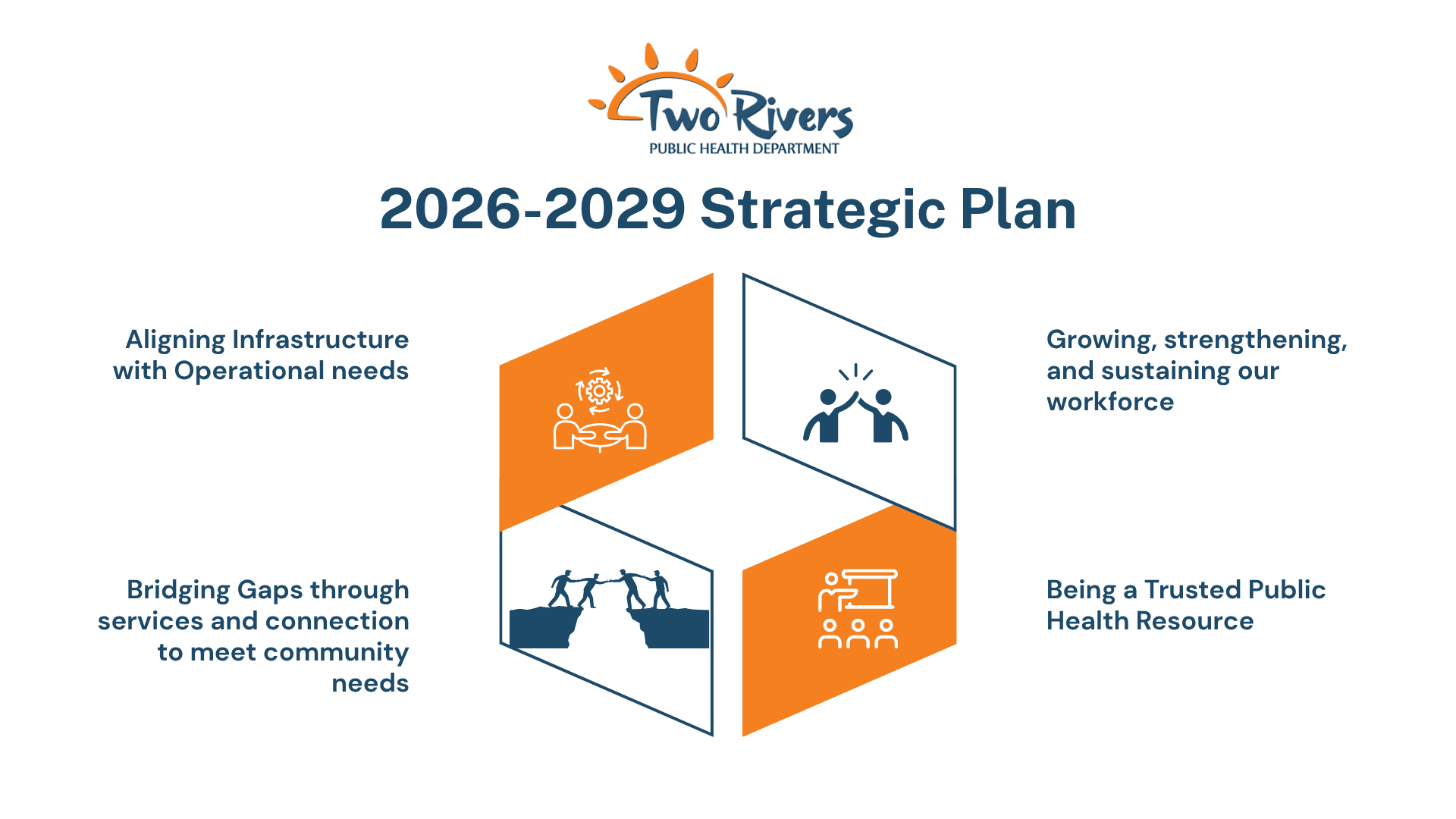
Using findings from the environmental scan and facilitated discussions, TRPHD established four strategic focus areas:
Aligning Infrastructure with Operational Needs: Ensuring facilities, technology, equipment, and operational systems support effective service delivery.
Growing, Strengthening, and Sustaining Our Workforce: Supporting recruitment, retention, professional development, and workforce capacity.
Being a Trusted Resource: Strengthening community relationships, public trust, collaboration, communication, and awareness of TRPHD services.
Bridging Gaps through Services and Connection to Meet Community Needs: Improving access to healthcare, community resources, and services that address identified health needs and barriers.
These priorities provide a framework for organizational improvement and guide the development of actionable strategies.
Phase 4: Strategy Development and Prioritization
Following the identification of strategic focus areas, TRPHD leadership participated in a facilitated session to develop a consistent approach to strategic problem-solving.
The process includes defining organizational problems, conducting root cause analyses, identifying potential solutions, and evaluating strategies based on anticipated impact and feasibility.
TRPHD began this work with the infrastructure focus area, developing tools and templates that can be applied to the remaining priorities. A prioritization matrix may be used to select strategies that provide meaningful organizational benefits while remaining achievable within available resources.
Phase 5: Implementation Planning and Performance Monitoring
TRPHD was introduced to the Theory of Change, also known as a logic model, to connect identified challenges with proposed strategies and intended outcomes.
The planning framework includes action planning worksheets and performance tracking tools to support the development of measurable objectives, assignment of responsibilities, monitoring of milestones, and evaluation of progress through key performance indicators.
This approach is intended to integrate strategic priorities into routine departmental operations and support accountability, continuous quality improvement, and long-term organizational sustainability.
Board of Health Findings Informing the Process
The Board of Health environmental scan included responses from 13 members representing all seven counties in TRPHD's service area. Their feedback helped validate organizational priorities and identify areas requiring attention.
Notable findings included:
85% identified staff expertise as a leading organizational strength.
77% identified TRPHD's programs as a strength.
85% identified funding instability as a significant internal challenge.
85% identified funding cuts as a significant external challenge.
77% identified local partnerships and collaboration as an important future opportunity.
92% identified the cost of living as a major factor affecting local health over the previous two to three years.
These findings reinforced the importance of organizational sustainability, workforce development, community partnerships, and maintaining public trust.
Ongoing Strategic Planning and Continuous Improvement
TRPHD's strategic planning process is designed to move beyond identifying priorities toward implementing and evaluating meaningful organizational improvements. Through leadership involvement, staff participation, structured action planning, and performance monitoring, the department aims to ensure that strategic decisions reflect both community needs and organizational capacity.
Previous Strategic Plans
-
This visual shows an update of the Strategic Plan as of June 2024